

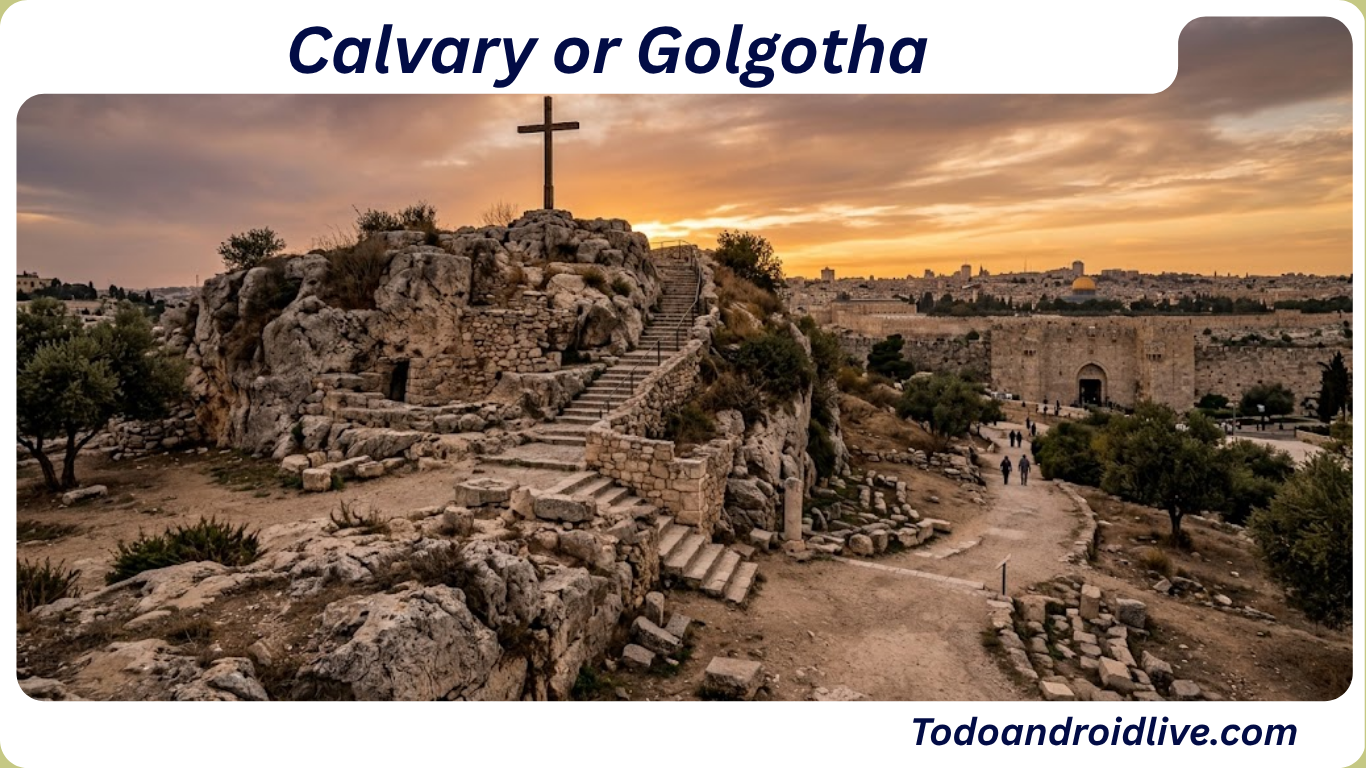
Understanding biblical geography and scripture requires clear historical context, translation knowledge, and geographical study. Among all physical locations mentioned in the New Testament, few carry greater historical weight than the site where Jesus Christ was executed. Readers studying ancient texts, reading modern translations, or researching Holy Land history often encounter two distinct terms for this single location: Calvary or Golgotha.
This comprehensive reference guide examines the linguistic origins, historical geography, translation development, and practical writing contexts for Calvary or Golgotha.
Calvary or Golgotha: Quick Direct Answer
The debate surrounding Calvary or Golgotha comes down to language, translation history, and specific usage contexts rather than two different physical locations.
Calvary and Golgotha both identify the exact same historical execution site located just outside the first-century walls of ancient Jerusalem.
Golgotha is the original Aramaic and Hebrew term used in the original Bible manuscripts. It literally translates to “Place of the Skull.”
Calvary comes from the Latin word Calvaria. Early Western church translators adapted this term when translating original manuscripts into Latin and English.
Modern writers choose between Calvary or Golgotha based on their target audience, writing tone, and specific educational background.
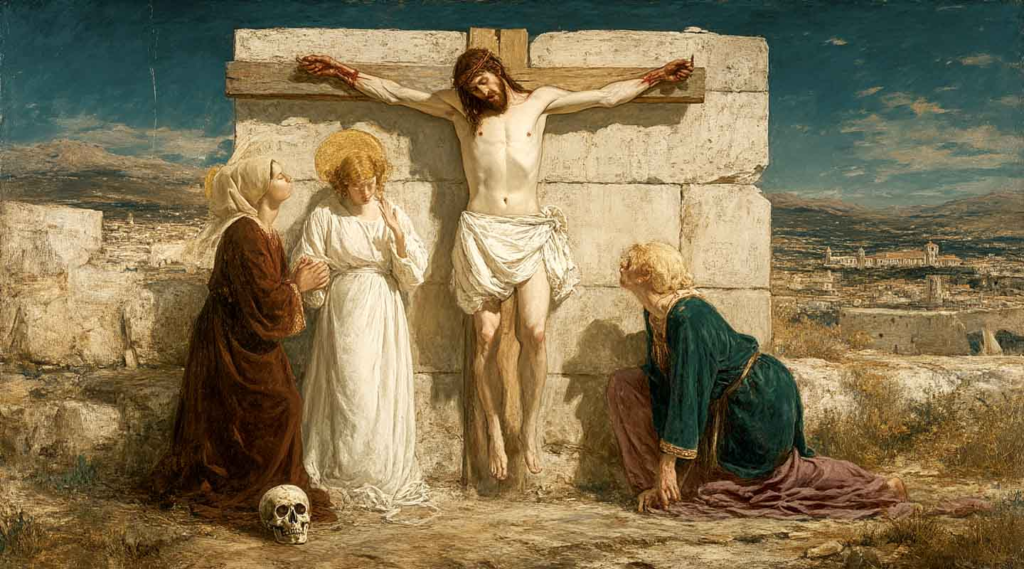
The Linguistic Evolution of Calvary or Golgotha
The Ancient Aramaic Roots of Golgotha
During the first century, Aramaic served as the primary spoken language among the Jewish population in Judea. Hebrew remained the language of religious scripture and formal temple study, while Koine Greek served as the general language of administration and cross-cultural trade across the Roman Empire.
The term Golgotha derives directly from the Aramaic word Gulgulta, which corresponds to the Hebrew word Gulgoleth. Literal translations render both terms as a skull or the head.
When gospel authors composed their records in Koine Greek, they preserved the local Aramaic pronunciation by writing Golgotha, while immediately providing Greek-speaking readers with the translation Kranion, meaning a skull.
Also Read: Pair or Pare: Meaning, Difference, and Usage Guide
How Latin Translation Created Calvary
As Christianity expanded across the Western Roman Empire, scholars translated scripture into Latin to serve western congregations. In the Latin Vulgate edition created in the late fourth century, Saint Jerome translated the Greek word Kranion using the Latin noun Calvaria.
When early English scholars translated scripture into English, they adapted the Latin Calvaria into the English name Calvary. Over centuries of church tradition, devotional literature, hymn writing, and formal preaching, the Latin-derived name became deeply established in standard English religious vocabulary.
Essential Distinction: Calvary vs. Cavalry
A very common spelling and vocabulary mistake occurs when writers confuse the religious place name Calvary with the military term Cavalry.
Calvary refers exclusively to the historical hill or execution grounds near ancient Jerusalem.
Cavalry refers specifically to military troops who fight on horseback or in modern mounted armored combat units.
Where Was the Site Located? Modern Archaeology and Geography
Modern historical, archaeological, and topographical research confirms that ancient executions took place outside the urban city boundary of first-century Jerusalem, as ancient purity laws prohibited public executions inside city walls.
Church of the Holy Sepulchre
Located inside the Christian Quarter of the Old City of Jerusalem, this ancient church complex represents the traditional historical site recognized since early antiquity.
Archaeological excavations confirm that during the early first century, this area lay outside the outer city wall of Jerusalem. It functioned as a limestone quarry and burial garden.
In 326 AD, Roman Empress Helena visited Jerusalem and identified the site beneath a Roman temple built by Emperor Hadrian. Construction began on a monumental basilica that continues to house the rocky outcrop known as the Rock of Golgotha.
Gordon’s Calvary and the Garden Tomb
Located north of the Damascus Gate, this alternate location was identified in 1883 by British General Charles Gordon. Gordon observed a rocky hill face containing two natural hollow limestone formations resembling human eye sockets, giving the cliff face the distinct appearance of a human skull.
While popular among visitors seeking a quieter, outdoor contemplative environment, most modern historians and archaeologists view this site as an 8th to 7th century BC Iron Age tomb complex rather than a first-century burial site.
Why Was It Called Place of the Skull?
Historians and biblical scholars offer three major explanations for why this specific location carried the name Place of the Skull:
Topographical Shape: The quarry cliff face or hill possessed a physical rock contour resembling a human cranium.
Historical Usage: The area served as an established site for public executions, where skeletal remains or physical signs of execution were well-known to locals.
Ancient Legend: Early theological writers recorded traditional legends asserting that the skull of Adam was preserved beneath the limestone bedrock of the hill.
Which Term Should You Use? Audience and Context Guide
Choosing between Calvary or Golgotha depends on your writing goals and intended readership.
When to Use Calvary
Church Content: Use Calvary in sermons, devotionals, worship music, and general church communication where readers appreciate familiar, warm phrasing.
Poetry and Hymns: Calvary fits poetic structure and carries strong emotional resonance in traditional Christian literature.
General Readers: Non-academic audiences recognize Calvary quickly due to centuries of popular literature and hymnody.
When to Use Golgotha
Academic and Historical Essays: Use Golgotha when writing research papers, historical studies, or formal biblical commentaries.
Scripture Study: Use Golgotha when analyzing original language texts, translating biblical passages, or focusing on first-century history.
Secular Publications: Historians, journalists, and secular publications prefer Golgotha for objective historical accuracy.
Comprehensive Glossary: 100 Relevant Synonyms and Key Terms
This reference collection organizes 100 accurate terms, geographical descriptors, linguistic variations, and historical phrases associated with Calvary or Golgotha, biblical history, and related terminology.
Geographical and Topographical Terms
- Execution hill
- Crucifixion site
- Skull Hill
- Mount of Execution
- Rock of Golgotha
- Rock of Calvary
- Sacred hill
- Holy Mount
- Jerusalem cliff
- Ancient quarry site
- Roman execution ground
- Historical hill
- Biblical mound
- Holy Land landmark
- Execution elevation
- Historic knoll
- Limestone outcrop
- Ancient burial ground
- Traditional holy place
- Judean hillside
Also Read: Maxed or Maxxed: Complete Spelling, Grammar, and Word Meaning Guide
Biblical and Scriptural Names
- Golgotha
- Calvary
- Place of the Skull
- Calvaria
- Kranion
- Gulgulta
- Gulgoleth
- Passion site
- Mount Calvary
- Site of the Cross
- The Mount
- The Hill
- Gospel location
- New Testament site
- Site of Suffering
- Place of Execution
- Place of Sacrifice
- Holy Sepulchre site
- Garden Tomb hill
- Gordon’s Calvary
Theological and Devotional Vocabulary
- Atonement site
- Redemption hill
- Holy Cross site
- Passion of Christ site
- Crucifixion place
- Sacred ground
- Devotional landmark
- Way of the Cross endpoint
- Via Dolorosa terminal
- Place of Salvation
- Sacred crest
- Altar of sacrifice
- Holy rock
- Christian pilgrimage destination
- Gospel setting
- Site of grace
- Easter history location
- Good Friday site
- Cross elevation
- Memorial hill
Linguistic, Military, and Institutional Distinctions
- Military horsemen (Cavalry)
- Mounted troops (Cavalry)
- Armored unit (Cavalry)
- Mounted force (Cavalry)
- Reinforcements (Cavalry)
- Calvary Chapel (Denomination)
- Non-denominational church (Calvary Chapel context)
- Evangelical fellowship (Calvary Chapel context)
- Bible church (Related ministry)
- Christian association (Ministry context)
Translation and Academic Vocabulary
- Transliteration
- Aramaic root
- Hebrew origin
- Latin Vulgate translation
- Koine Greek text
- Scriptural geography
- Biblical archaeology
- Historical context
- Topographical marker
- Ancient Judean site
- First-century location
- Extramural site
- Municipal execution center
- Historical site identification
- Sacred geography
- Ancient city boundary
- Antiquities region
- Archaeological excavation area
- Historical monument
- Heritage location
Related Contextual Descriptors
Also Read: Emerse or Immerse: Correct Spelling, Meanings, and Usage Guide
- Place of death
- Final destination
- Historical cross location
- Roman punishment area
- Ancient city gate site
- Limestone formation
- Historic hillside
- Sacred crest
- Scripture landmark
- Universal faith symbol
Frequently Asked Questions
Are Calvary or Golgotha two different places?
No. They refer to the exact same physical location near Jerusalem. Golgotha is the original Aramaic name, while Calvary comes from the Latin translation.
Is Calvary a high mountain or a small hill?
The Bible never describes the location as a high mountain. Gospel writers refer to it simply as a place or site. Later Christian tradition added the title Mount due to the elevated rock outcrop where executions were held.
Which English Bible translations use Golgotha versus Calvary?
Most modern English translations like the NIV, ESV, and NASB use Golgotha in the main text with explanatory footnotes. The King James Version uses Calvary in Luke 23:33, translating directly from the Latin tradition.
What is Calvary Chapel?
Calvary Chapel is an international fellowship of non-denominational evangelical churches. It began in the late 1960s in Southern California and focuses heavily on verse-by-verse Bible exposition.
Can tourists visit the actual rock of Golgotha today?
Yes. Visitors can see portions of the original limestone bedrock preserved behind glass inside the Church of the Holy Sepulchre in Jerusalem.
Conclusion
When choosing between Calvary or Golgotha, remember that both terms point to the exact same historic site. Golgotha provides original linguistic accuracy for academic and study settings, while Calvary offers familiar devotional resonance for traditional church contexts. Understanding the history of both words ensures clear, confident writing across any project.