

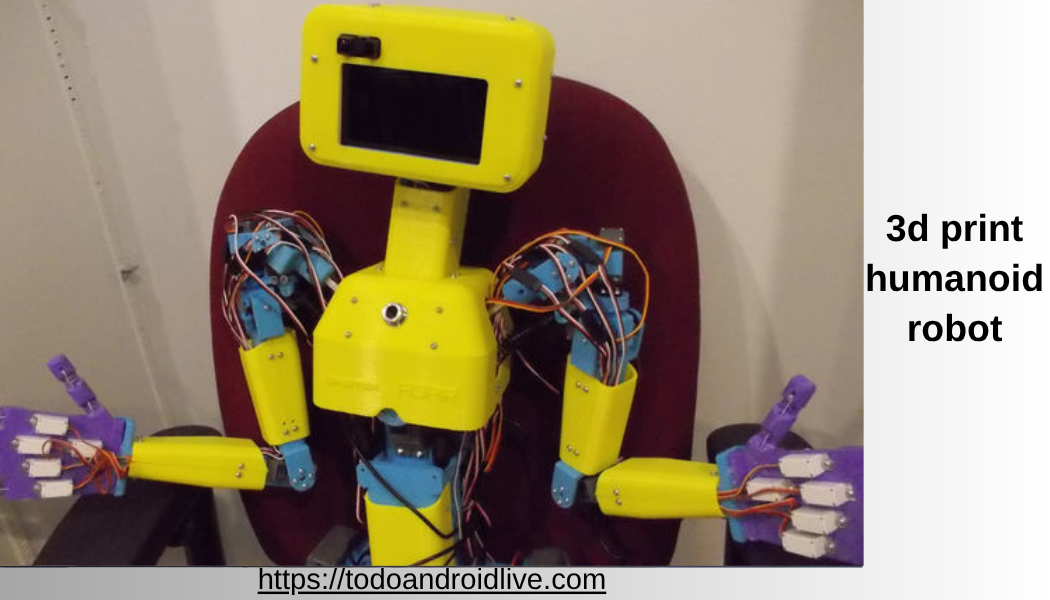
The idea of creating a human-like robot at home once seemed impossible. Only large technology companies and research laboratories could afford to build advanced humanoid robots. Today, things have changed dramatically. Thanks to affordable 3D printers, open-source electronics, artificial intelligence, and online maker communities, almost anyone can start building a 3d print humanoid robot from home.
A humanoid robot is a robot designed to look or move like a human. These robots may have arms, legs, hands, heads, cameras, sensors, and even speech systems. Some can walk, talk, recognize faces, and respond to voice commands.
The rise of the 3d printed humanoid robot movement has opened new opportunities for students, engineers, hobbyists, startups, and researchers. Instead of spending hundreds of thousands of dollars on industrial robotics systems, creators can now print robot parts using affordable desktop 3D printers.
This technology is changing education, automation, robotics research, healthcare, and entertainment. It is also helping people learn engineering, coding, electronics, and artificial intelligence in practical ways.
In this complete guide, you will learn everything about building a 3d print humanoid robot, including materials, components, software, costs, open-source projects, Arduino integration, AI features, future trends, and practical insights that go beyond most online articles.
What Is a 3D Print Humanoid Robot?
A 3d print humanoid robot is a robot with human-like features that is partially or completely built using 3D-printed components.
These robots often include:
- Printed body parts
- Electronic circuits
- Motors and servos
- Sensors
- Cameras
- Batteries
- Controllers
- Artificial intelligence software
3D printing allows creators to manufacture custom robot parts layer by layer using materials such as PLA, ABS, PETG, or resin.
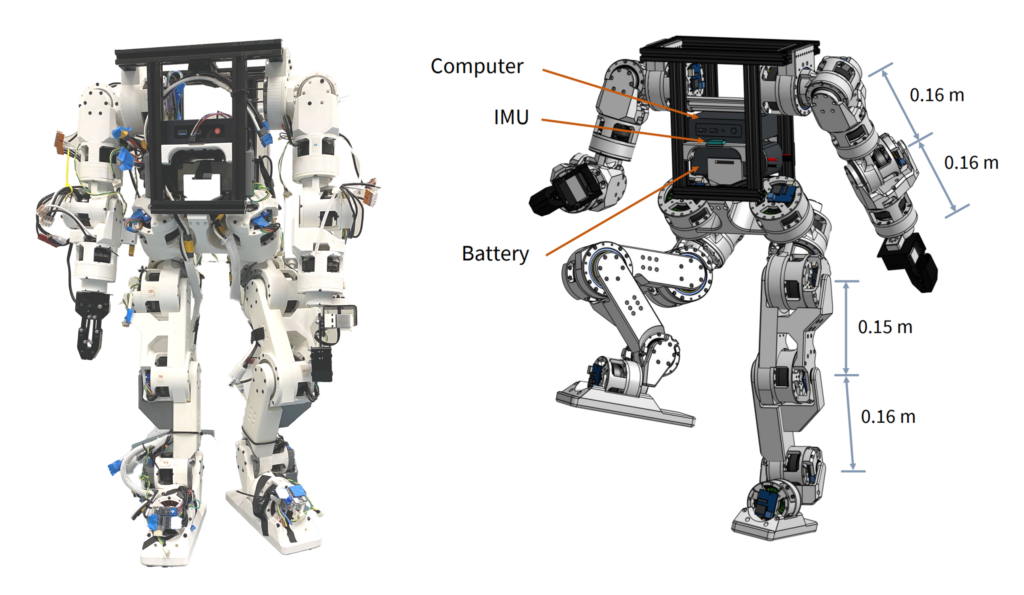
Instead of buying expensive metal components, builders can print robot frames, arms, legs, gears, and covers directly from digital files.
Why 3D Printing Changed Humanoid Robotics
Before 3D printing became popular, robotics development was expensive and slow.
Also read:Robot Arm 3D Printer: Complete 2026 Guide to Robotic Arm 3D Printing Technology
Traditional manufacturing required:
- Metal machining
- Injection molding
- Specialized factories
- Large engineering budgets
Now, desktop 3D printers allow people to create complex robot structures at home.
Lower Costs
3D printing reduces manufacturing expenses dramatically.
Fast Prototyping
Builders can quickly redesign and reprint parts if something fails.
Easy Customization
Robot designs can be modified for different purposes.
Open Innovation
Online communities share robot files freely, helping beginners learn faster.
The combination of robotics and 3D printing has created a major shift in technology education and innovation.
How a 3D Printed Humanoid Robot Works
A 3d printed humanoid robot combines mechanical, electronic, and software systems.
Mechanical Structure
The printed frame forms the robot’s body.
This may include:
- Head
- Arms
- Legs
- Torso
- Hands
- Feet
- Joints
Motors and Servos
Motors allow movement.
Servo motors are commonly used because they provide controlled positioning for:
- Walking
- Arm movement
- Head rotation
- Gripping
Controllers
Microcontrollers or mini computers control robot actions.
Popular options include:
- Arduino
- Raspberry Pi
- ESP32
- NVIDIA Jetson
Sensors
Sensors help robots interact with the environment.
Examples include:
- Ultrasonic sensors
- Cameras
- Gyroscopes
- Accelerometers
- Touch sensors
- Infrared sensors
Software and AI
Software controls movement, speech, and decision-making.
Advanced robots may use:
- Computer vision
- Voice recognition
- Machine learning
- AI assistants
Popular Types of 3D Printed Humanoid Robots
Not all humanoid robots are the same.
Educational Robots
These are built for learning robotics and programming.
Research Robots
Universities use humanoid robots for AI and movement experiments.
Companion Robots
Some robots are designed for communication and emotional interaction.
Industrial Humanoid Robots
Companies are exploring robots for factory work and logistics.
Entertainment Robots
These robots are used in shows, museums, and social media content.
Best Materials for 3D Printed Humanoid Robot Projects
Choosing the right printing material is important.
PLA
PLA is the most beginner-friendly material.
Advantages:
- Easy to print
- Affordable
- Good for prototypes
Disadvantages:
- Less heat resistant
- Can become brittle
ABS
ABS is stronger and more heat resistant.
Advantages:
- Durable
- Better impact resistance
Disadvantages:
- Harder to print
- Produces fumes
PETG
PETG offers a balance between PLA and ABS.
Advantages:
- Strong
- Flexible
- Moisture resistant
Resin Printing
Resin printers provide high detail for smaller robot parts.
However, resin printing is usually more expensive and requires careful handling.
Essential Components for a 3D Print Humanoid Robot
Building a humanoid robot requires multiple components.
3D Printer
Popular printer types include:
- FDM printers
- Resin printers
Microcontroller
Many beginners choose Arduino because it is affordable and easy to learn.
This is why searches for 3d printed humanoid robot arduino continue increasing.
Servo Motors
Servos provide accurate movement control.
Battery System
Portable robots require rechargeable batteries.
Sensors
Sensors help robots understand their surroundings.
Wiring and Connectors
Electrical connections power the system.
Software Platform
Programming tools control robot behavior.
3D Printed Humanoid Robot Arduino Projects
Arduino has become one of the most popular platforms for beginner robotics.
A 3d printed humanoid robot arduino project usually combines:
- Arduino boards
- Servo motors
- Sensors
- Printed body parts
Why Arduino Is Popular
Arduino is widely used because it is:
- Affordable
- Beginner-friendly
- Open-source
- Supported by large communities
Common Arduino Robot Features
Robots may include:
- Obstacle avoidance
- Walking motions
- Voice control
- Bluetooth control
- Gesture recognition
Limitations of Arduino
Arduino is excellent for beginners but has limited processing power for advanced AI tasks.
More advanced robots may combine Arduino with Raspberry Pi or Jetson systems.
Humanoid Robot 3D Print Open Source Projects
Open-source robotics is one of the biggest reasons humanoid robotics is growing rapidly.
A humanoid robot 3d print open source project allows users to download designs, modify files, and improve systems collaboratively.
Benefits of Open-Source Robotics
- Lower costs
- Faster innovation
- Community support
- Shared knowledge
Popular Open-Source Robot Platforms
Many projects include:
- Printable STL files
- Wiring diagrams
- Arduino code
- AI software
Open-source robotics communities help beginners avoid starting completely from scratch.
How to Design a 3D Printed Humanoid Robot
Designing a robot requires planning.
Step 1: Define the Robot’s Purpose
Ask:
- Will it walk?
- Will it talk?
- Will it use AI?
- Is it educational or industrial?
Step 2: Create 3D Models
Software options include:
- Fusion 360
- Blender
- SolidWorks
- Tinkercad
Step 3: Plan Electronics
Choose motors, sensors, controllers, and batteries.
Step 4: Print Components
Robot parts are printed separately.
Step 5: Assemble the Robot
Builders install motors, wires, and electronics.
Step 6: Program the Robot
Coding controls movement and intelligence.
Can a 3D Printed Humanoid Robot Walk?
Yes, but walking is one of the most difficult challenges in robotics.
Also read:How to Make a Robot with 3D Printer: Complete Beginner to Advanced Guide (2026 Updated)
Walking robots require:
- Balance control
- Joint coordination
- Real-time sensor feedback
Bipedal movement is complex because robots must constantly adjust their center of gravity.
This is why many beginner robots use wheels before moving to walking systems.
Artificial Intelligence in 3D Printed Humanoid Robots
AI is transforming robotics rapidly.
Modern humanoid robots may use AI for:
- Speech recognition
- Facial recognition
- Navigation
- Object detection
- Decision-making
AI makes robots more interactive and useful.
Machine Learning
Machine learning allows robots to improve behavior through experience and data.
Computer Vision
Cameras combined with AI help robots identify objects and people.
Voice Assistants
Some humanoid robots integrate voice assistants similar to smart home devices.
Programming Languages Used in Humanoid Robotics
Robotics programming depends on project complexity.
Arduino C/C++
Used for motor control and sensor integration.
Python
Popular for AI and machine learning.
ROS (Robot Operating System)
ROS is widely used in advanced robotics development.
JavaScript
Sometimes used for robot interfaces and web control systems.
Challenges of Building a 3D Printed Humanoid Robot
Humanoid robotics is exciting but challenging.
Balance and Movement
Walking robots require advanced coordination.
Battery Life
Portable robots consume significant power.
Motor Costs
High-quality servos can become expensive.
Software Complexity
Advanced AI systems require strong programming knowledge.
Durability
Plastic parts may wear out under heavy stress.
How Much Does a 3D Printed Humanoid Robot Cost?
Costs vary widely depending on complexity.
Beginner Projects
Simple robots may cost:
- $100 to $500
Intermediate Robots
More advanced systems may cost:
- $500 to $3,000
Advanced AI Humanoid Robots
Complex humanoid robots may exceed:
- $10,000
Servo motors and AI hardware often become the most expensive parts.
Best 3D Printers for Humanoid Robot Projects
Choosing the right printer matters.
Beginner Printers
Affordable FDM printers are best for beginners.
Large Build Volume Printers
Larger printers reduce the need for splitting parts.
High Precision Printers
Detailed robot components may require high-resolution printing.
Reliability is more important than speed for robotics projects.
How 3D Printed Humanoid Robots Are Used in Education
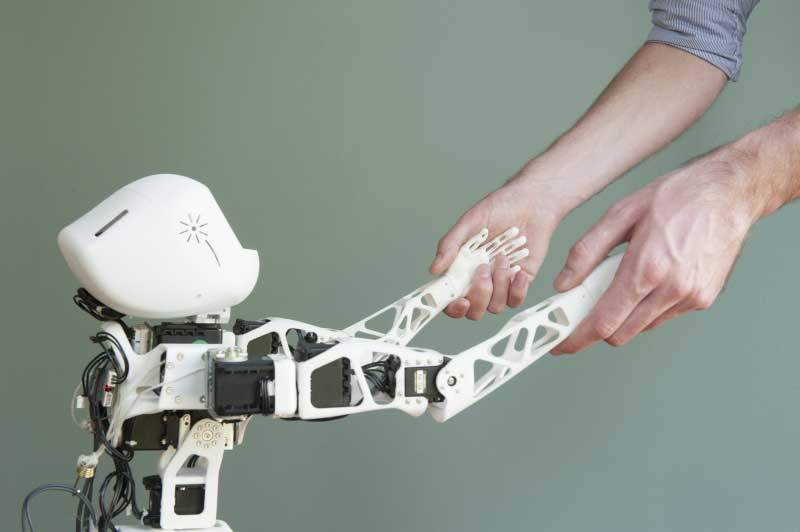
Schools and universities increasingly use humanoid robots for STEM education.
Students learn:
- Programming
- Engineering
- AI concepts
- Electronics
- Problem-solving
Hands-on robotics education improves creativity and technical skills.
Healthcare Applications of Humanoid Robots
Healthcare robotics is expanding rapidly.
Humanoid robots may assist with:
- Patient interaction
- Rehabilitation exercises
- Elderly support
- Therapy programs
3D printing helps reduce development costs for medical robotics.
Industrial Future of 3D Printed Humanoid Robots
Companies are investing heavily in humanoid robotics.
Potential future uses include:
- Warehouse automation
- Manufacturing
- Customer service
- Dangerous environment work
However, fully replacing human workers remains difficult because human movement and intelligence are extremely advanced.
Environmental Benefits of 3D Printed Robotics
3D printing may reduce manufacturing waste compared to traditional production methods.
Advantages include:
- Less material waste
- Local production
- Faster prototyping
- Reduced transportation needs
Sustainability will become increasingly important in future robotics manufacturing.
The Role of Open Communities in Robotics Innovation
One important insight often overlooked is the power of maker communities.
Open-source robotics communities accelerate innovation by allowing thousands of people worldwide to contribute ideas and improvements.
This collaborative culture is one reason the humanoid robot 3d print open source movement is growing so quickly.
Why Humanoid Robots Fascinate People
Humanoid robots attract attention because they resemble humans.
People naturally connect emotionally with human-like movement and communication.
However, designing realistic humanoid robots also creates challenges known as the “uncanny valley,” where robots appear almost human but still feel unnatural.
Future AI and robotics improvements may reduce this issue.
Ethical Questions Around Humanoid Robots
As robots become smarter, ethical concerns continue growing.
Also read:How to Make a 3D Printed Robot: Complete Beginner-to-Advanced Guide for 2026
Questions include:
- Should robots replace human jobs?
- How should AI decisions be controlled?
- What privacy protections are needed?
- Can humanoid robots create emotional dependence?
The future of robotics will require both technological progress and responsible regulation.
Future Trends in 3D Printed Humanoid Robot Development
The next decade will likely bring major advancements.
Better AI Integration
Robots will become more intelligent and adaptive.
Improved Battery Technology
Longer battery life will improve mobility.
Lighter Materials
Advanced materials will increase durability while reducing weight.
Cheaper Components
Robotics hardware costs may continue decreasing.
Home Assistant Robots
Consumer humanoid robots may eventually become common in homes.
Practical Advice for Beginners
If you want to build your first 3d print humanoid robot, start simple.
Many beginners fail because they attempt advanced walking robots immediately.
A better approach is:
- Learn basic 3D printing
- Understand Arduino programming
- Build small robotic systems
- Add sensors gradually
- Experiment with AI later
Step-by-step learning produces better long-term results.
The Future of Human and Robot Collaboration
Robots are unlikely to replace humans completely.
Instead, future workplaces will probably combine:
- Human creativity
- AI analysis
- Robotic automation
Humanoid robots may become assistants rather than replacements.
Industries such as healthcare, education, and logistics could benefit greatly from collaborative robotics.
Final Thoughts
The rise of the 3d print humanoid robot movement represents one of the most exciting technology shifts of the modern era. Affordable 3D printing, open-source robotics, AI tools, and global maker communities have made humanoid robotics more accessible than ever before.
Today, students, hobbyists, engineers, and startups can create advanced robotic systems from home using affordable components and shared knowledge. From educational robots to AI-powered humanoid assistants, the possibilities continue expanding rapidly.
The future of the 3d printed humanoid robot industry will likely include smarter AI, improved movement systems, better materials, and more affordable robotics hardware. Open-source innovation will continue playing a major role in accelerating development worldwide.
Whether you are interested in a 3d printed humanoid robot arduino project, advanced AI robotics, or a humanoid robot 3d print open source platform, this field offers incredible opportunities for creativity, learning, and innovation.
As robotics and artificial intelligence continue evolving together, humanoid robots may eventually become common tools in homes, schools, hospitals, factories, and businesses across the world.
FAQs About 3D Print Humanoid Robot Projects
What is a 3d print humanoid robot?
A 3d print humanoid robot is a human-like robot built partly or fully with 3D-printed components.
Can beginners build a 3d printed humanoid robot?
Yes. Many beginner-friendly kits and open-source projects are available online.
What is the best controller for humanoid robots?
Arduino is popular for beginners, while Raspberry Pi and NVIDIA Jetson are better for advanced AI projects.
How much does a 3d printed humanoid robot cost?
Costs range from around $100 for simple projects to several thousand dollars for advanced humanoid systems.
Can a 3d printed humanoid robot walk?
Yes, but walking requires advanced balance systems, sensors, and programming.
What software is used to design robot parts?
Popular software includes Fusion 360, Blender, SolidWorks, and Tinkercad.